
Of the Earth's surface,71% is covered by sea. Thus, the sea is the world's largest biological environment, providing about 300 times more living space than that of the combined terrestial and fresh water environment.

Contribution of the sea to man's welfare
(1) Source of food:
The sea is in itself a vast and self-replenishing stock of fish,shrimp,lobster,crabs,etc.
Moreover, commercial fishing is an important economic activity.
(2) Source of industrial raw materials, for example, from sea weeds.
(3) Energy exploitation:
Offshore drilling for petrol, for example, more than 200 platform rings are drilling oil on the continental shelves of many countries, producing over 500 million tonnes a year - Vast reserves of oil; harnessing of tidal waves for generation of hydroelectricity.
(4) Navigation:
- Travelling
- Economical means for bulk transport

(5) Mining the sea beds for mineral resources:
- Polymetallic nodules(very rich in the Indian Ocean)
- Source of manganese,copper,cobalt,etc.
(6) National Defence
(7) Recreation and Water sports

(8) Oceanography
Creation of marine laboratories. In 1902,an international council was created for the exploration of the sea - Application of marine sciences for peaceful purposes.
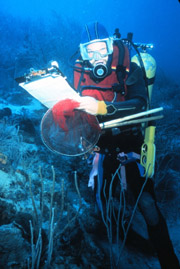
Sources of marine pollution

(1) Discharges at fixed points, urban domestic waste, industrial waste, diffused waste, run-up water, atmospheric fallout.
(2) Pollution caused by dumping by ships and aircrafts.
(3) Pollution resulting from exploration and exploitation of the continental shelf, the seabed and the subsoil.
Effects of marine pollution
Direct pollution: Continuous or sporadic, usually limited to sea coast.
Indirect pollution: A large number of products,substances or physical phenomena, which result from human activity, which can seriously modify the marine environment.
(1) The long residence times of chemicals in the ocean/The formation of toxic broth - Widespread mortality and disease to organisms.
(2) Fishing by dynamites
- Damage to coral reefs
- Sand quarry
- Whales threatened to extinction
- Rise of the temperature of the sea by 1% or 2%
Mitigating effects
(1) Under the law of the sea which has been ratified by old UN members,
- each state is bound to manage and conserve living resources. Every sea-bound country is endeavouring towards the conservation of marine environment and resources by controlling pollution.
- only limited of the coast are affected by pollution affecting the seafloor. The only significant consequence is a limitation in artisanal fishing.
- Tidal waves and especially the ocean's currents over the world tend to diffuse the pollutants so as to render them harmless. Sea water is itself asceptic to a certain extent.
- The developing countries extend their 200-mile economic zone and the developed countries go up to the continental shelf. So the possibilities for dumping have greatly reduced.
- Petroleum is biodegradable and there are bacteria in the sea.
- Various societies, clubs and agencies are striving to restore the animals and plant commodities of the sea, especially those which are commercially valuable.
- Creation of artisanal habitats. Also, industries treat their effluence before they are let off into the sea.

No comments:
Post a Comment